Supporting a Spouse Through Addiction Recovery
Supporting a spouse through addiction recovery is one of the most challenging acts of love you’ll ever undertake. When addiction enters a marriage, it doesn’t just affect the person using substances. It reshapes trust, communication, intimacy, and the future you imagined together. If you’re reading this, you’ve likely watched someone you love struggle, and you’re wondering how to help without enabling, how to stay strong without losing yourself, and whether your relationship can survive this.
Understanding Your Role in Your Spouse’s Recovery Journey
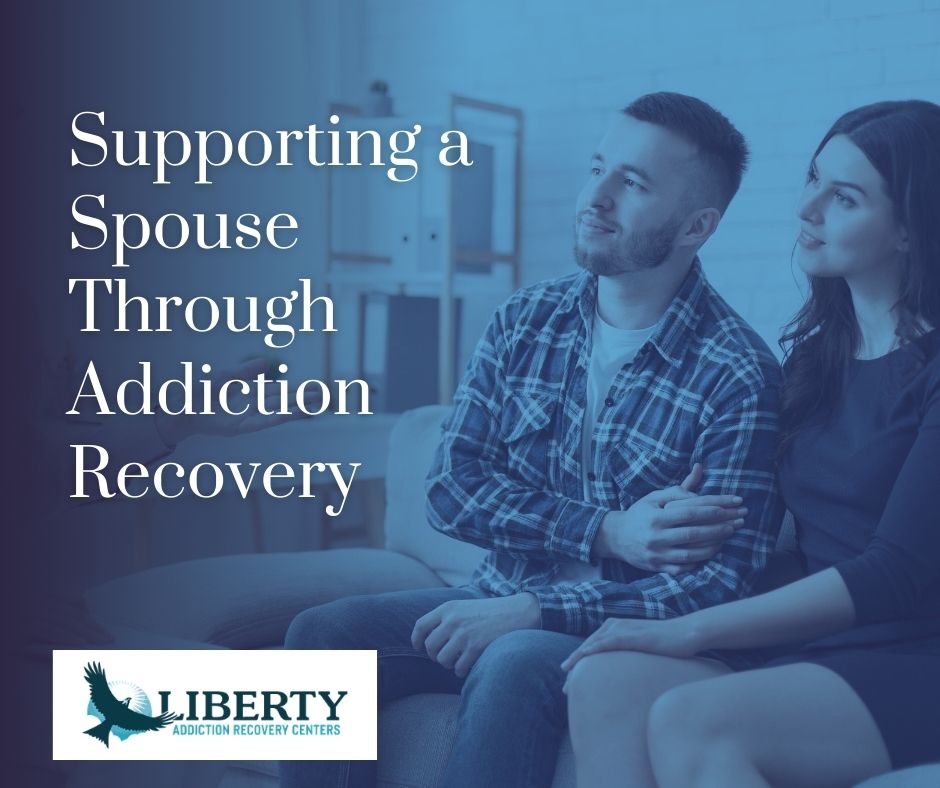 First, let’s be clear about something important: you didn’t cause your spouse’s addiction, you can’t control it, and you can’t cure it. Those are the three C’s of Al-Anon, and they’re true. But you do play a vital role in creating an environment where recovery becomes possible.
Your partner’s addiction likely developed from underlying issues like trauma, untreated mental health conditions, or chronic pain. At Liberty Addiction Recovery Centers, we see this every day. Our dual-diagnosis treatment addresses both addiction and co-occurring mental health conditions because lasting recovery requires healing the whole person.
Supporting partner recovery means understanding that addiction is a medical condition, not a moral failing. Your spouse isn’t choosing substances over you. They’re caught in a cycle where their brain has been rewired to prioritize the substance above everything else, including the people they love most.
What Spouse Addiction Does to a Marriage
Let’s talk honestly about what you’re experiencing. Living with spouse addiction often means:
- Walking on eggshells, never sure which version of your partner you’ll encounter
- Taking on responsibilities that used to be shared, becoming more parent than partner
- Hiding the problem from family, friends, or your children
- Financial stress from money spent on substances or lost income
- Emotional exhaustion from broken promises and repeated disappointments
- Loss of intimacy, both physical and emotional
- Constant worry about their safety and health
These experiences are valid. You have every right to feel frustrated, angry, scared, and heartbroken. Acknowledging these feelings doesn’t make you unsupportive. It makes you human.
The Valentine’s Day Reality: Love Isn’t Always Enough
 February brings Valentine’s Day, a holiday celebrating romantic love. But when you’re living with addiction, heart-shaped chocolates and greeting cards feel hollow. The person you married seems like a stranger. The future you planned together feels impossible.
Here’s the truth: love matters enormously, but love alone doesn’t cure addiction. Your spouse needs professional treatment. They need evidence-based therapy, medical support, and structured programming. What your love can do is create the conditions for them to accept help.
Many spouses tell us they feel guilty for setting boundaries or considering treatment. “If I really loved them, wouldn’t I just be more patient?” No. Real love sometimes means making hard decisions. It means refusing to enable destructive behavior. It means protecting yourself and your children while still offering support.
How to Support Your Spouse Without Losing Yourself
Family support works best when it comes from a healthy place. You can’t pour from an empty cup. Here’s how to be supportive while maintaining your own wellbeing:
Set Clear Boundaries
Boundaries aren’t punishments. They’re necessary limits that protect your mental health, finances, and safety. Examples include: “I won’t give you money for substances,” “I won’t lie to cover for you,” or “I won’t allow substance use in our home.” Stick to these boundaries even when it’s difficult.
Stop Enabling Behaviors
Enabling looks like love but actually prevents recovery. Stop making excuses for their behavior, calling in sick for them, paying their bills when money went to substances, or protecting them from natural consequences. Let reality motivate change.
Educate Yourself
Learn about addiction, treatment options, and recovery. Understanding how cravings work and what triggers look like helps you respond effectively rather than react emotionally.
Get Your Own Support
Join Al-Anon or a similar support group for families of people with addiction. Consider individual therapy. You’re dealing with trauma too. Liberty offers family therapy as part of our comprehensive programming because we know addiction affects everyone.
Take Care of Your Health
Don’t neglect your physical and mental health. Exercise, sleep, eat well, and maintain social connections. Your spouse’s recovery journey may be long. You need stamina.
Encouraging Treatment Without Ultimatums or Manipulation
You can’t force someone into recovery, but you can create conditions that make treatment the logical choice. Here’s how:
Express Concern from a Place of Love: Use “I” statements. “I’m scared when you drive after drinking” works better than “You’re a terrible person when you drink.”
Remove Obstacles to Treatment: Offer to help verify insurance coverage using Liberty’s Check My Insurance tool. Address concerns about work or childcare. Research treatment costs together.
Be Ready When They’re Ready: Have treatment options researched. Know that Liberty offers residential treatment, intensive outpatient programs, and flexible scheduling including evening detox. When your spouse says “I need help,” you can act immediately.
Consider a Professional Intervention: If your spouse is in denial or resistant, a professionally guided intervention might be necessary. Liberty’s admissions team can connect you with intervention specialists.
What to Expect When Your Spouse Enters Treatment
If your spouse agrees to treatment, understand that recovery is a process, not an event. Here’s what the journey typically looks like:
Many people start with medical detox, where medical professionals manage withdrawal symptoms safely. This typically takes 5-7 days. Your spouse may then transition to residential treatment for 30, 60, or 90 days, depending on their needs.
At Liberty, residential treatment includes individual therapy, group sessions, trauma-informed care, and preparation for life after treatment. Family therapy sessions give you both tools to rebuild trust and communication.
After residential care, many clients step down to a partial hospitalization program or intensive outpatient program. This allows them to practice recovery skills while gradually resuming normal life. Sober living provides additional structure with a 93% success rate after 12 months.
Your role during treatment: attend family sessions when offered, work on your own recovery from codependency, and prepare for the changes ahead. Your spouse will be different after treatment. That’s the goal. Be ready to meet this new version of your partner.
Rebuilding Trust and Intimacy After Addiction
Trust isn’t rebuilt in a day, week, or month. It’s earned through consistent actions over time. Your spouse completing treatment is a huge step, but it’s just the beginning.
Rebuilding intimacy requires both partners to be vulnerable and patient. You’ve both been hurt. Your spouse lost themselves to addiction. You lost the partner you knew. Healing happens in small moments: honest conversations, kept promises, shared experiences without substances.
Couples therapy specifically focused on addiction recovery helps navigate this terrain. You’ll learn new communication patterns, address resentments, and rediscover each other. Some couples find their relationship becomes stronger than before addiction. Others realize the damage is too deep. Both outcomes are valid.
Real Stories of Recovery
You’re not alone in this struggle. Many couples have walked this path before you. Here’s what some of our clients and their families have shared:
-
Excellent staff and counselors, mcall is my favorite and George is the best at making you feel at home and loved
 Chandler Burgess
Macall is the best this place wouldn't run without her really she does more then anyone
Calvin Richards
This is an absolutely amazing rehab I recommend it
Chrystal Farrar
-
I didn’t think I needed treatment until I came through this program. It helped me learn that it wasn’t just my addiction I needed to work on. I learned the... read more
Suzanne Hopkins
I want to thank Liberty for providing me the space and support to begin my process of recovery and healing. This was my first time in treatment, and for those... read more
Nick Wright
Liberty is by far the best treatment facility I've been to. I've been to 3 counting them. They just care... like really care. It's feels like a home. Unfortunately... read more
FuhQ_69
-
I was able to come here and get the treatment I needed for starting my recovery in a safe place. The staff helped me along with the owners to help... read more
Joseph Renwick
When I first came to liberty I was so depressed and lost. I was more lost then I realized and didn't know how to fix the damage I caused from... read more
Austin Nicholas
I cannot be more grateful for Liberty Addiction. I just graduated their Residential program and it is absolutely serene the changes I have gone through and the confidence I have... read more
Alyssa Moore
-
I am currently in Liberty's IOP program and I was just recently in their residential program. Liberty is the best treatment center for drug and mental health treatment.! The owners... read more
Taya Draper
Liberty Addiction Recovery Center is by far the absolute best Inpatient Treatment Center for both Substance Use Disorder and Mental Health Diagnosis I've ever been to. This place is different... read more
Elmer Hernandez
By far the best recovery center I've been to. The staff, manager, owners are amazing. It was really nice to see the owners so involved and visiting the house occasionally.
kelli
-
I worked with Jeremy to get into rehab for months but wasn’t ready until July when I called him he got me a spot very quickly, when I arrived I... read more
Angelica Arizmendi Reyes
This place is amazing. it really helped me a lot the therapists are amazing there is no place like this one. It's life changing the best one I've been... read more
Chantelle Riley
I was at Liberty it was the greatest 60 days everybody was awesome Bryce was so funny Monica you couldn't ask for a better person Steve was awesome I just... read more
Carl Hutchins
-
This place honestly is life changing. The people that work here are so dedicated and honestly amazing. Liberty hit gold with Bridger whom u hardly see but when he's... read more
Tabatha Huntoon
I loved my time at liberty out patient! The staff and councilors were all super friendly and relatable. They were all on-site and offered genuine and professional insights and invaluable... read more
Brenn Johnson
My experience with Liberty addiction recovery centers outpatient program was one of the best decisions I have ever made. The staff there are amazing and very supportive. I can honestly... read more
Danyel Minnis
-
Honestly, unfortunately I have been to 5 other rehabs. And I can say I am SO HAPPY, GLAD, FORTUNATE & BLESSED that I found Liberty Addiction Recovery hopefully this last... read more
Tyson Hansen
Groups are amazing, schedule is great, the entire process is a complete learning opportunity.
Christopher Tabbee
This is by far the best rehabilitation place I've been to! They are dual diagnostic, and have an amazing and outstanding staff that is kind and helpful. I would strongly... read more
Nick
-
My experience at Liberty Addiction Recovery was literally life changing. I was a heavy user off and on for over 20 years. The therapeutic program at Liberty far surpassed my... read more
Misty Larsen
Liberty is such an incredible program. I have learned more about myself than anywhere I’ve been. Thank you for being apart of my life and community. I now know I... read more
Ashlyn Johnson
Been to several treatment centers, and this is by far the best there is. Beautiful home in a nice area, personalized treatment plan at a dual diagnosis facility, feels like... read more
Bryce Anderson
-
My stay at liberty was fantastic. They helped me acknowledge my codependency issues in romantic relationships and how to better cope with my addiction with alchole so that I can... read more
Jon Stearns
The staff is so amazing caring and understanding show up for us every day the house manager is so loving one of the bestest staff and clinical director is so... read more
Svetlana Johnson
I finally got the help I needed after 13 years of misery and it's all thanks to liberty. 5 stars all day!
Courtney No
-
Liberty is absolutely amazing! It's the best treatment experience by far. The staff is sincerely supportive, going out of their way to assist with resources. Liberty genuinely puts their heart... read more
Anna
They are all really great. they help you with everything you need. They have great therapist and groups.
Shelby Banks
Liberty has been great to work with and are very understanding! Highly recommend reaching out! I had been to several rehabs and found myself needing to finish IOP to fulfill... read more
Mark Broadhead


When to Consider Your Own Limits
 Supporting a spouse through recovery doesn’t mean staying in an unsafe or unsustainable situation. You may need to consider separation if:
- Your spouse refuses treatment repeatedly despite consequences
- There’s physical violence or abuse
- Your children’s safety or wellbeing is compromised
- Your own mental or physical health is deteriorating
- Financial devastation threatens your family’s survival
Leaving doesn’t mean you don’t love them. Sometimes it means you love yourself and your children enough to protect them. And sometimes, losing the relationship becomes the wake-up call that motivates someone to finally get help.
Getting Help for Your Family
Liberty Addiction Recovery Centers treats addiction as a family disease. We offer comprehensive care that addresses the underlying causes of addiction, whether that’s opioid dependence, alcohol addiction, or other substance use disorders.
Our clients report a 79% decrease in depression symptoms and a 46% decrease in anxiety symptoms. We treat the whole person with trauma-informed care, evidence-based therapies, and lifelong support including employment pathways and an active alumni program.
Call us today at (801) 997-9183 to discuss treatment options for your spouse. Our compassionate admissions team can answer your questions, verify insurance coverage, and help you take the next step. Whether your spouse is ready now or you’re preparing for when they are, we’re here to help.
Our Locations
Residential Treatment Facility
Address: 15257 2765 W, Bluffdale, UT 84065
Phone: (801) 997-9183
Outpatient Treatment Facility (IOP and PHP)
Address: 6671 S Redwood Rd Suite # 201, West Jordan, UT 84084
Phone: (801) 997-9183
Frequently Asked Questions
How can I help my spouse without enabling their addiction?
The key difference is that help supports recovery while enabling prevents it. Help looks like: offering to research treatment options, attending family therapy, setting healthy boundaries, and letting natural consequences occur. Enabling looks like: giving money that might buy substances, lying to cover for them, taking over all their responsibilities, or protecting them from the results of their choices. True support sometimes means letting your spouse experience discomfort that motivates change.
Should I stay with my spouse during their addiction, or is it okay to leave?
Only you can answer this question. Staying can be an act of love and commitment, but it’s not required or always healthy. Consider leaving or separating if there’s violence, ongoing refusal to get help despite repeated chances, or if your own mental or physical health is severely suffering. Many people set a clear boundary: “I’ll support you through treatment, but I can’t stay if you continue using.” Your wellbeing matters too, and sometimes leaving becomes the consequence that finally motivates someone to change.
What should I say to convince my spouse to go to rehab?
Avoid lectures or ultimatums that feel like attacks. Instead, express specific concerns with love: “I’m scared when you black out and don’t remember our conversations,” or “I miss feeling connected to you.” Share how addiction affects you and your family. Offer concrete support: “I’ve researched treatment options and found Liberty accepts our insurance. I’ll help with childcare and work arrangements.” Choose a calm moment when they’re sober. If direct conversation doesn’t work, consider a professionally guided intervention.
Can I attend therapy sessions with my spouse during their treatment?
Yes, and you should. Most comprehensive treatment programs like Liberty’s include family therapy sessions. These sessions help you understand addiction, learn healthy communication, address resentments, and rebuild trust. Family involvement significantly improves treatment outcomes. Beyond scheduled family sessions, consider getting your own individual therapy or joining Al-Anon to work through the trauma you’ve experienced living with addiction.
How long does it take for a marriage to heal after addiction treatment?
There’s no standard timeline. Some couples feel reconnected within months; others need years. Healing depends on how long the addiction lasted, what damage occurred, how committed both partners are to recovery, and whether you both engage in ongoing therapy. Trust rebuilds slowly through consistent actions. Your spouse must demonstrate sustained sobriety and behavior change. You must be willing to gradually let your guard down. Many couples find their relationship eventually becomes stronger than before addiction, built on honesty and shared struggle.
What if my spouse relapses after treatment?
Relapse is common in recovery, though not inevitable. If it happens, it doesn’t mean treatment failed. It means your spouse needs additional support or a different approach. Respond with firm compassion: acknowledge the setback, but reinforce boundaries. Many people need multiple treatment episodes before achieving lasting sobriety. Liberty offers lifelong alumni support and can help clients re-engage with treatment quickly if relapse occurs. The question isn’t whether relapse is acceptable (it’s not), but how you’ll respond to protect yourself while encouraging your spouse to get back on track.
This Valentine’s Day, Choose Love That Heals
Supporting a spouse through addiction recovery is an act of profound love, but it requires wisdom, boundaries, and professional help. You can’t do this alone, and you shouldn’t try.
If your spouse is struggling with addiction, call Liberty Addiction Recovery Centers at (801) 997-9183 today. Whether they’re ready for treatment now or you’re planning for the future, our team can guide you. Check your insurance coverage online, and take the first step toward healing your family. Recovery is possible, and your marriage can survive this. But it starts with getting the right help.
Meta Description:
Supporting a spouse through addiction recovery requires love and boundaries. Learn how to help your partner heal while protecting yourself. Call Liberty: (801) 997-9183
Social Media Post:
Love isn’t always enough to overcome addiction, but it creates the conditions for healing. If you’re supporting a spouse through recovery, you need healthy boundaries, professional help, and support for yourself too. Liberty Addiction Recovery Centers offers family therapy and comprehensive treatment. Your marriage can survive this. Call (801) 997-9183 or verify insurance online.